


Radioactive: Marie Curie and the Matilda Effect
With Radioactive, Marjane Satrapi depicts Marie Curie at work—brilliant and contested—and reveals how history tried to diminish her role. A narrative that makes the Matilda Effect tangibly felt.
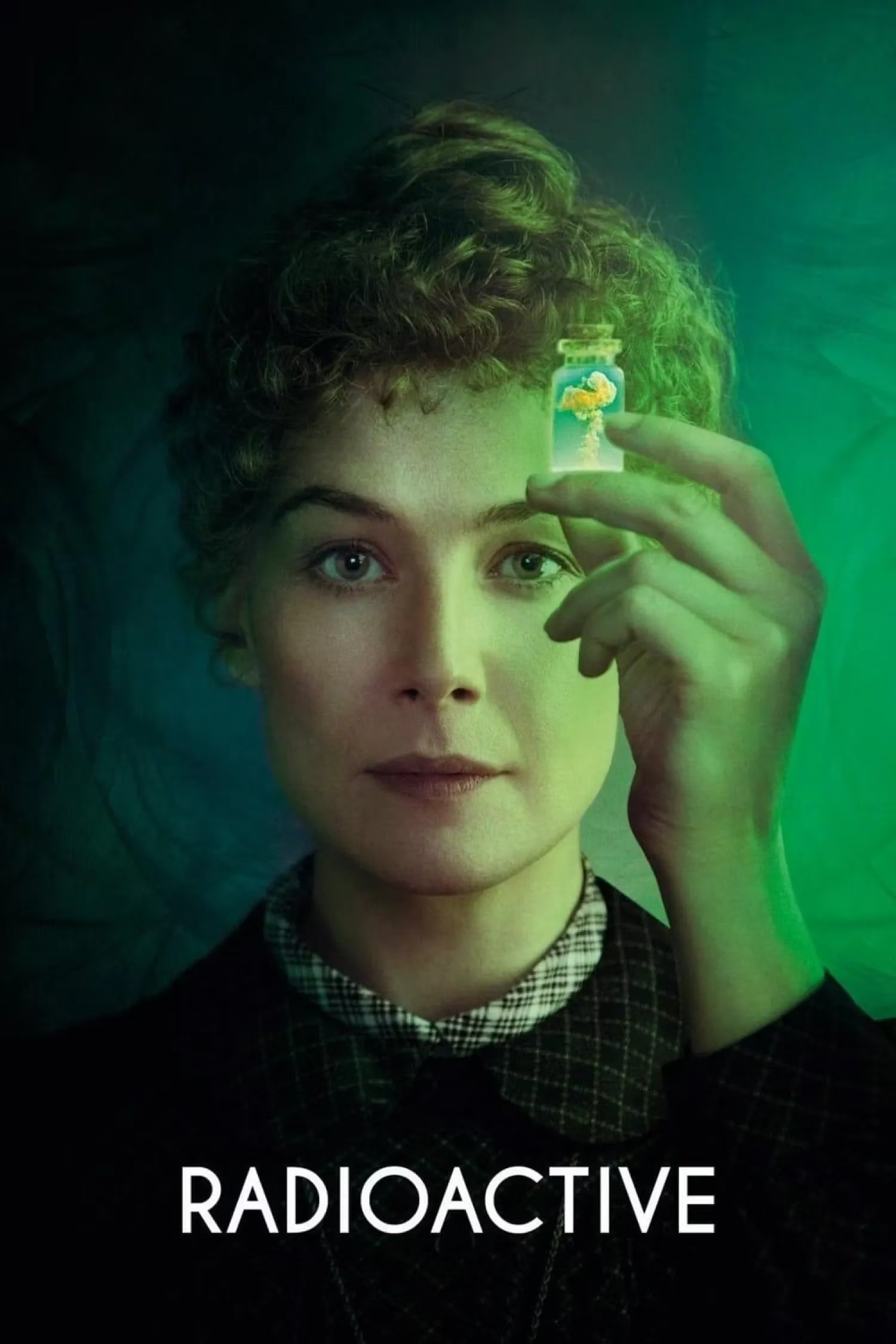
From its opening scenes, Radioactive refuses the frozen statue and follows a scientist at work. Marjane Satrapi frames Marie Curie within the very materiality of experiments: the fatigue of repeated gestures, intuition refined over time, and notebooks filled with measurements and trials. Discovery is not a romantic illumination; it is a sequence of attempts, corrected errors and debated principles. This realistic choice has a strong effect: it places the researcher at the center of action where public narratives have too often relegated women to the periphery.
Marie Curie was not only a great scientist; she was a force of nature who had to fight at every turn for her place in history.
Throughout the biopic, private life, scientific work and the circulation of ideas intertwine. Marie's meeting with Pierre Curie takes the shape of an intellectual alliance as much as an affectionate partnership. The film reminds us how the laboratory is a space of co-construction, cross-notes and methodological choices. This collaboration does not erase Marie; it clarifies her role. After Pierre's death, she takes up the reins, expands research, organizes resources and continues to publish. The trajectory restores a truth sometimes omitted in simplified narratives: Marie Curie's scientific autonomy is not a belated consequence but a continuous reality.
This is precisely where the Matilda Effect appears in the background. Coined by historian Margaret W. Rossiter, the term describes the invisibility, misattribution or minimization of women's credit in science. In Marie Curie's case, this shadow slips into the margins: the 1903 Nobel episode initially conceived without her before being corrected, the closed doors of the Academy of Sciences, and the media uproar around her relationship with Paul Langevin—all moments when society preferred to debate a woman's respectability rather than acknowledge the rigor of the scientist. Radioactive does not impose this frame afterwards; it shows situations, glances and institutional hesitations that help explain how a bias can take hold when credit is not firmly documented, supported and named.
Premier principe : ne jamais se laisser abattre par des personnes ou par des événements.
Le film choisit aussi une mise en perspective temporelle, en reliant la radioactivité à ses héritages contrastés. Les images de blocs opératoires, d’unités de radiothérapie, mais aussi les visions des catastrophes et des usages militaires rappellent que la science n’est jamais purement abstraite : elle se prolonge dans des pratiques, des politiques, des responsabilités. Cette perspective évite l’hagiographie et souligne un autre point essentiel pour comprendre Matilda Effect: la valeur d’une contribution ne disparaît pas parce que ses usages sont ambivalents. Le débat éthique peut être vif ; il ne justifie pas l’effacement de l’autrice de la découverte.
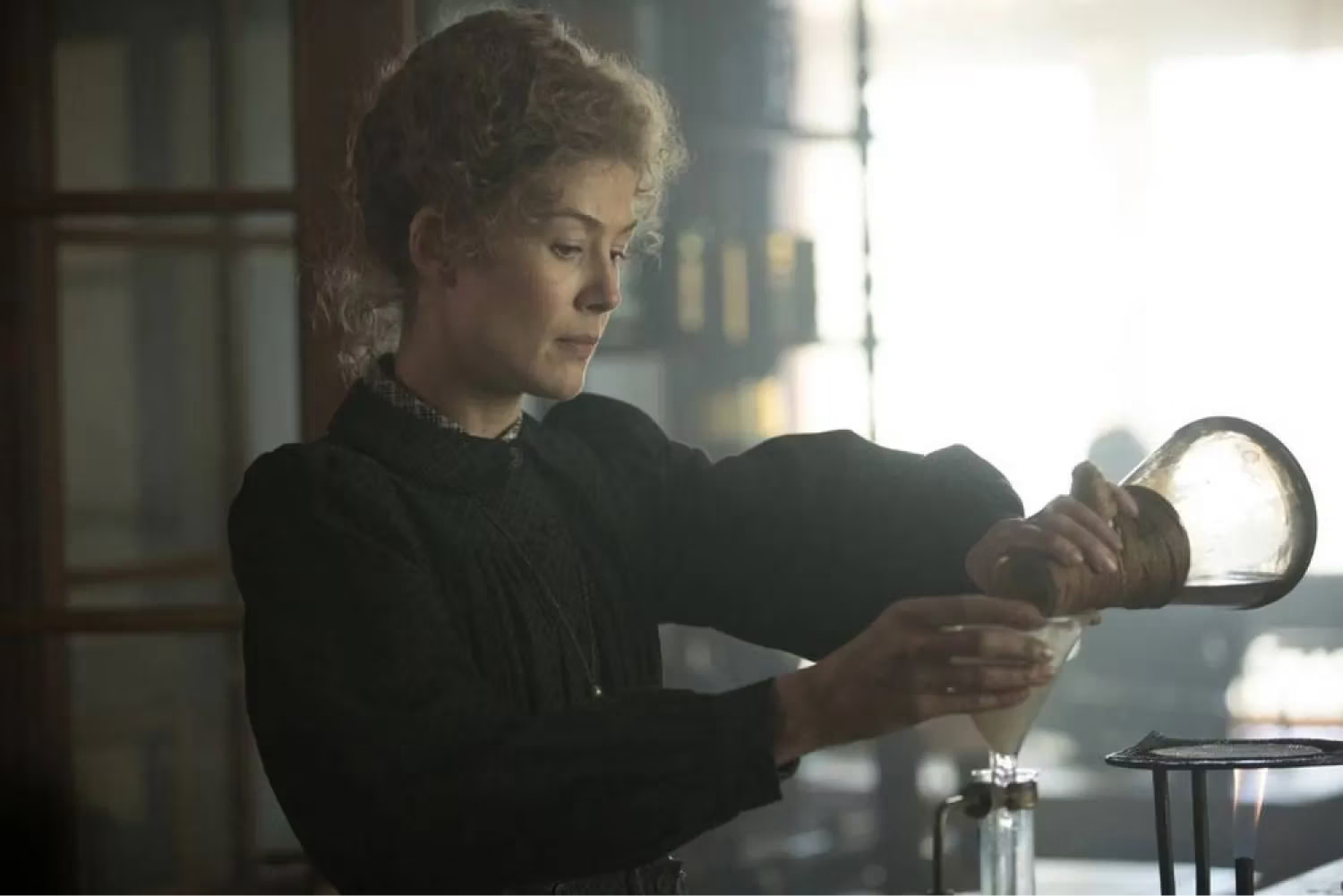
What Radioactive particularly succeeds in is restoring the method. We watch Marie Curie record, sort, retry and publish. This materiality of knowledge becomes the best answer to invisibility: when an experiment is described, a note is dated, or a signature attests to a result, credit ties to evidence. The film thus recalls a simple and powerful rule: to counter the Matilda Effect, one must archive, publish, co-sign wisely and ensure the chain of transmission—from the laboratory to institutions—is clear.
On ne fait jamais attention à ce qui a été fait ; on ne voit que ce qui reste à faire.
L’interprétation de Rosamund Pike renforce ce message. Sa Marie Curie n’est ni l’icône glacée ni l’héroïne sans faille. Elle doute, se met en colère, se heurte aux cadres sociaux, puis revient à la table d’expériences. Ce retour constant au réel de la recherche dessine un personnage dont la force vient moins de la célébration que de la persévérance. En montrant la chercheuse qui se bat pour le financement, pour l’accès aux espaces, pour la reconnaissance de ses pairs, le film place la question du crédit au cœur de l’intrigue et non en annexe.
On a site dedicated to the Matilda Effect, Radioactive serves as a case study. It shows how invisibility creeps in—not always by conspiracy but through habits, reflexes and institutions that favour certain names and forget others. It also teaches the methods to counter it: link evidence to the author, revise narratives when archives demand it, and teach the collective nature of research without dissolving individual contribution. The film thus becomes both a tool for scientific culture and a biographical narrative.
En sciences, nous devons nous intéresser aux choses, pas aux personnes.
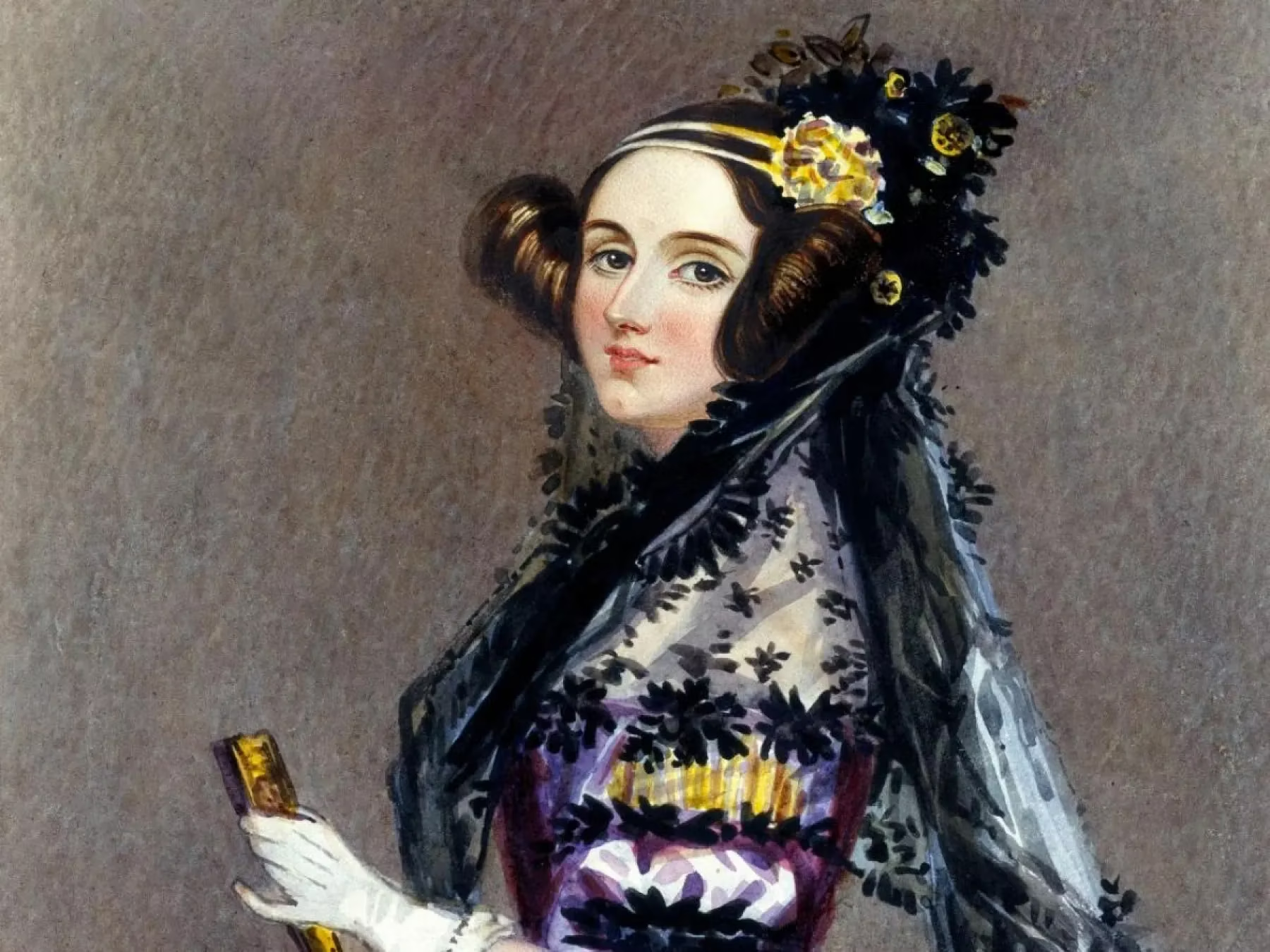
« Radioactive » dialogue naturellement avec l’histoire d’Ada Lovelace, pionnière de l’algorithmique mise à l’honneur dans cette série d’articles. Chez Ada comme chez Marie, des idées fondatrices ont été rendues discutables ou secondaires parce que la société, les institutions et les récits médiatiques ont privilégié d’autres figures, souvent masculines, ou d’autres critères que la qualité de la démonstration. Relire Ada à la lumière de Marie, et Marie à la lumière d’Ada, is to understand that the Matilda Effect n’est pas un épisode isolé mais une trame répétée, que l’on peut défaire à force de précision, de sources et de narration juste.
“Making things visible is not an added luxury; it is a condition of truth.” This sentence could serve as a guiding thread for the entire project. Radioactive reminds us forcefully: science is about results, and also about attributions. Telling the story correctly is already a way of repairing.