


The Forgotten Women of History: Repairing Erasure, Understanding the Matilda Effect
Panoramic view of women relegated to the background: The Forgotten Women of History explains how to repair erasure — a perfect resource book for understanding the Matilda Effect.
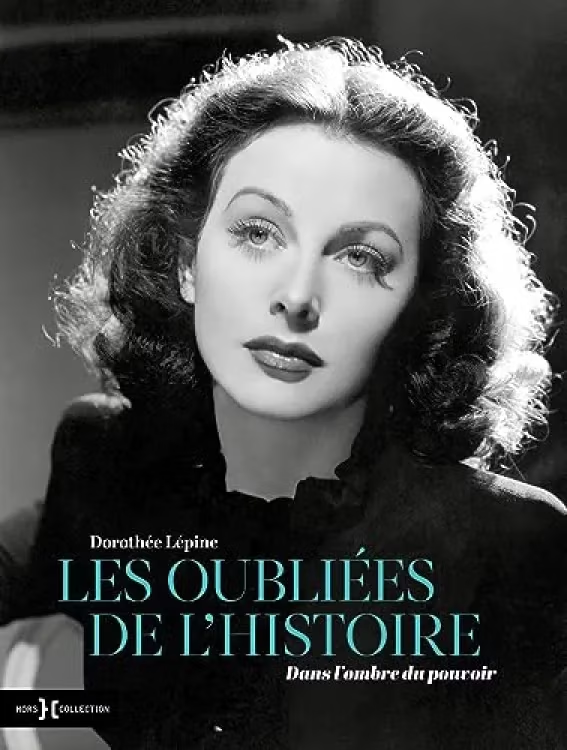
Published in 2021, The Forgotten Women of History – In the Shadow of Great Men collects portraits of women whose actions were decisive but pushed into the background behind a husband, a lover, a colleague or a mentor. The work, by Patricia Chaira and Dorothée Lépine (Hors Collection), starts from a simple observation: in science, arts or politics, intelligence has no gender, but the distribution of credit has often been biased. This logic of erasure — named in 1993 the "Matilda Effect" by historian Margaret W. Rossiter — explains why some figures do not make it into textbooks, or appear only as footnotes.
Excerpts from the book
"Behind every great man, there is a woman..."
The book offers an accessible, illustrated writing that restores flesh to trajectories long told through a male "hero". You encounter, for example, Émilie du Châtelet behind Voltaire's legend, Lee Krasner facing the Pollock myth, or Mileva Marić in Einstein's shadow. Presenting these lives alongside the famous man is not anecdotal: it is precisely how forgetting was constructed — by the habit of naming a single author where works and discoveries emerged from complex ecosystems.
The strength of the work is to maintain a double focus: narrate and reattribute. Narrate by repositioning these women within their networks, places and very concrete constraints (access to education, workshops, labs, funding). Reattribute by showing how scientific or artistic credit is manufactured: notebooks, publications, co-signatures, correspondence and material traces that allow us to accurately name who did what. These are the practical antidotes to the Matilda Effect: document, source and make visible.
Excerpts from the book
"Intelligence has no gender, nor does ambition."
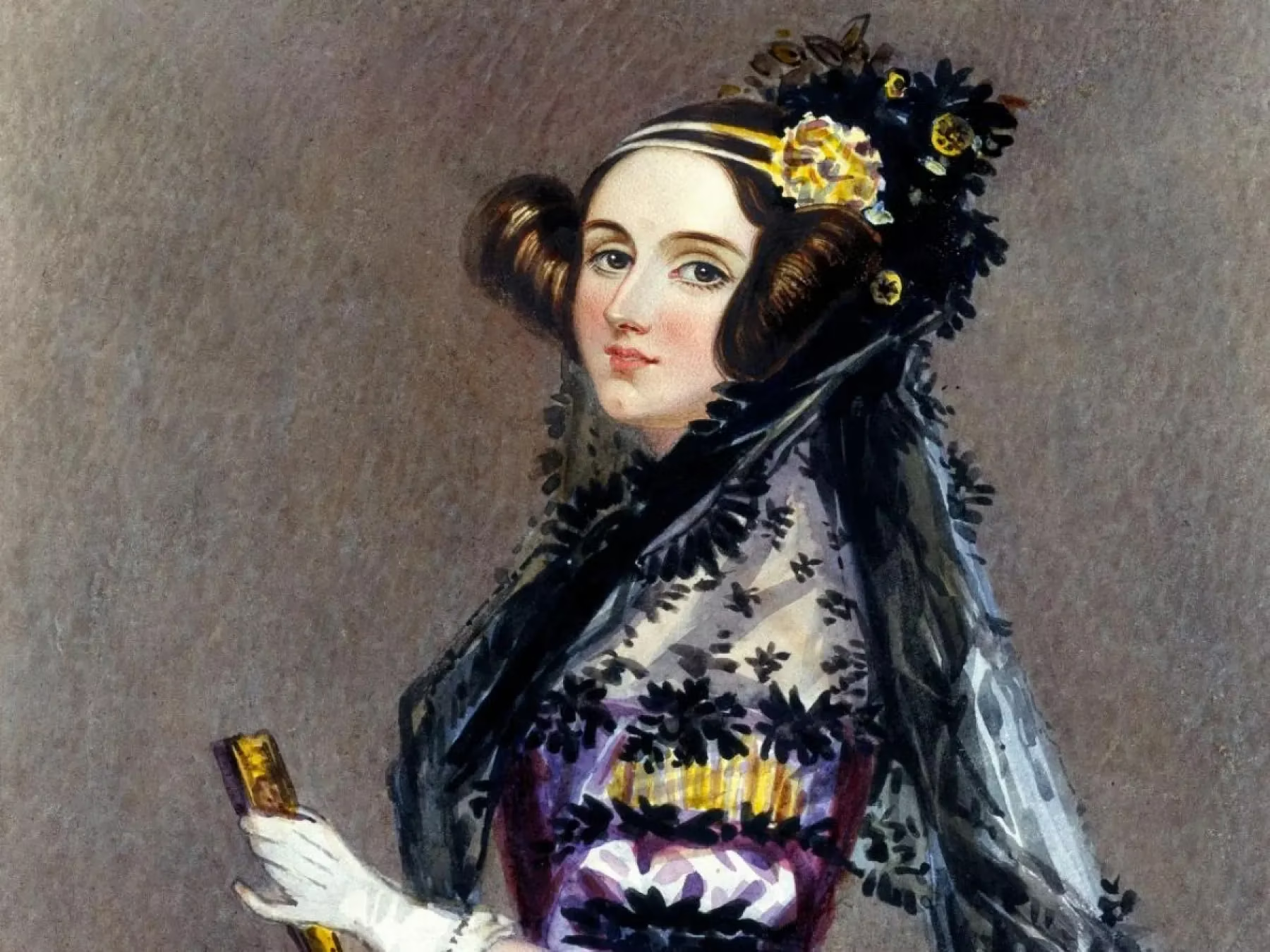
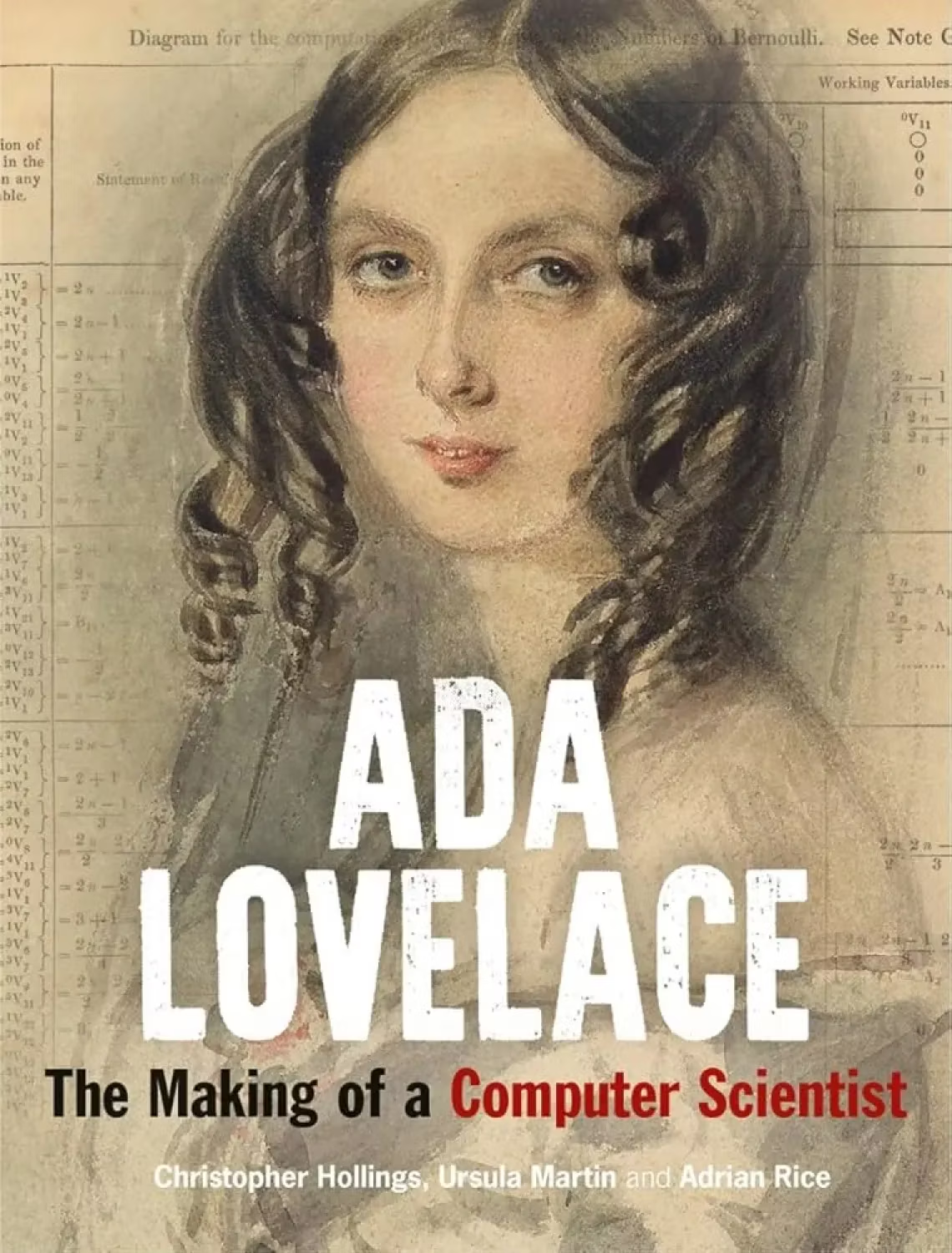
The release of a second volume in 2023, The Forgotten Women of History – In the Shadow of Power, further expands the mapping. It includes political, economic, media and scientific profiles — from Barbe Nicole Ponsardin to Irène Joliot-Curie, including Hedy Lamarr, Peggy Guggenheim, Paulette Nardal… and Ada Lovelace, a pioneer of algorithmics featured on your site. Ada's presence is a useful pivot: it shows that invisibilization does not affect only one era or field but follows recurring patterns (institutional bias, reduction to the role of wife/muse, dissociation between idea and evidence).
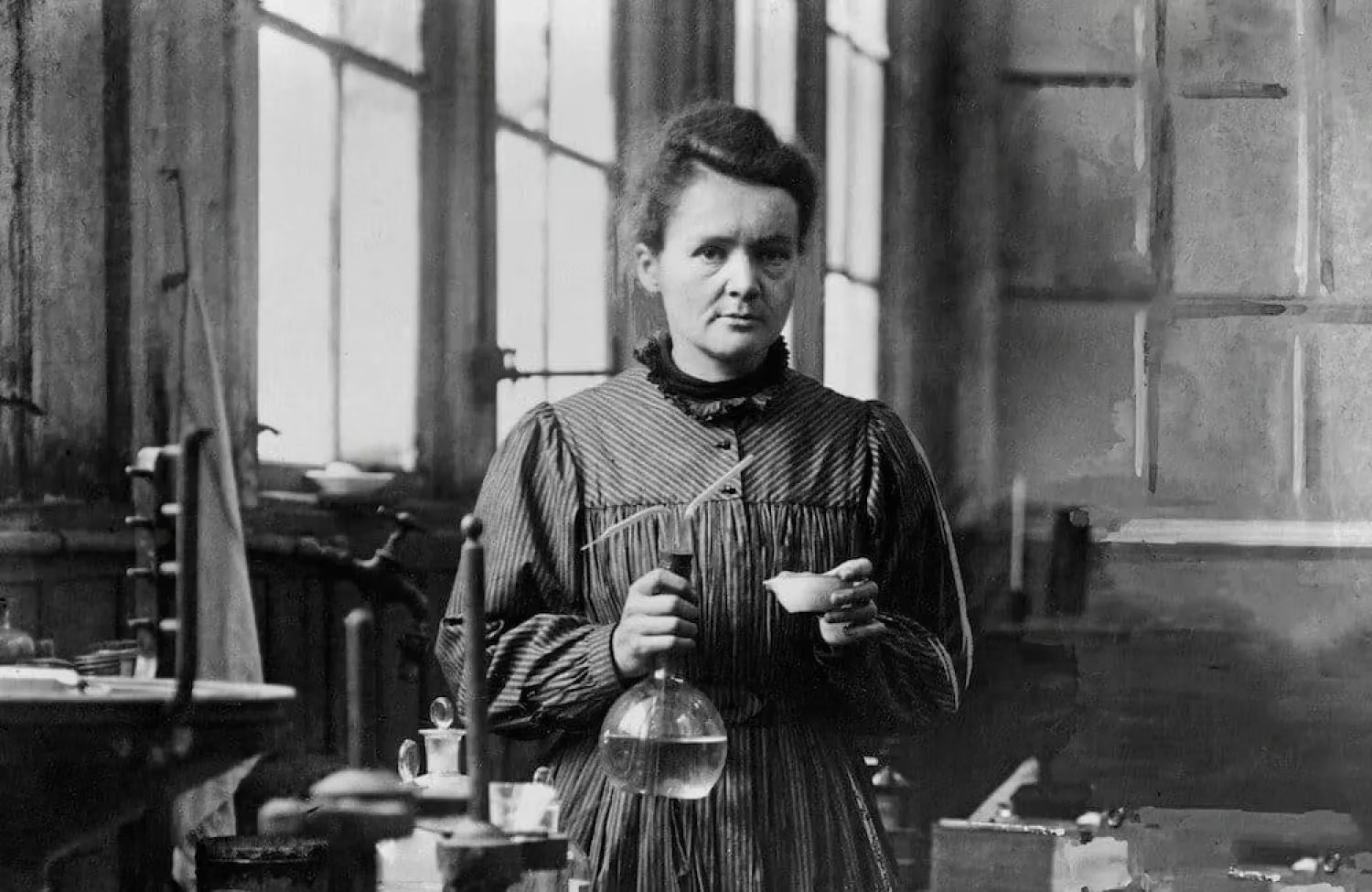
For a site dedicated to the Matilda Effect, this diptych functions as an entry-level library. It offers readable cases, historical anchors and a common vocabulary to describe the specific injustice that does not deny the value of a work but shifts the name associated with it. Integrated into a resources section, the book naturally dialogues with your articles: the page on Ada Lovelace illuminates the conceptual part of the "program" and the question of general programmability; the film page on "Radioactive" shows, through Marie Curie, how institutions (academies, juries, media) can first exclude and then belatedly correct the credited attribution.
Excerpts from the book
"Exceptional women have influenced society."
Another important aspect of The Forgotten Women of History is its narrative framing: the book does not try to "replace" one pantheon with another, but rather to repair lineages. By making networks and transmissions visible, the book offers students concrete role models and provides readers with evidence that it is possible to work differently: collaborate, publish under one's own name, keep a lab notebook, archive the stages of a creative process, and defend one's rights as an author.
At its core, the book is a pedagogical tool for teaching about credit. It reads quickly, is easy to cite, and saves time when creating educational modules, reading guides or exhibitions (physical or web) about "Matildas" from different eras. For an editorial project like yours, it serves as a foundation: short, clear entries that can be used as cards or sidebars in your pages, with links to longer biographies, archival material and more in-depth analyses.
Excerpts from the book
The Forgotten Women of History – In the Shadow of Great Men restores life to women's trajectories that have been pushed to the margins of the dominant narrative. Chapter after chapter, the book situates these lives within their real networks — workshops, laboratories, salons, journals, funding bodies — to show how the credit for a work or discovery is constructed. The point is not to create a counter-pantheon, but to repair lineages: to document who did what, when, and with what evidence, so that the author's name travels with the result.